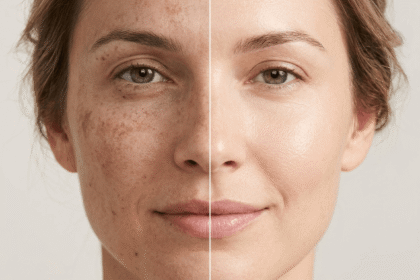
You wake up, look in the mirror, and there they are — those stubborn brown or grayish patches on your cheeks, forehead, or upper lip. If this sounds familiar, you’re likely dealing with melasma.
Melasma is one of the most common — and most frustrating — skin conditions out there. It doesn’t hurt, but it can seriously knock your confidence. The tricky part? It tends to come back even after it fades.
The good news is that melasma treatment has come a long way. Whether you prefer a simple at-home routine or want faster results from a professional, there are real, proven options that work. Let’s break them all down.
What Is Melasma and Why Does It Happen?
Melasma is a skin condition that causes brown, tan, or grayish patches — usually on the face. It happens when melanocytes (the cells that produce skin color) become overactive and produce too much pigment in certain areas.
It’s more common in women, especially during:
- Pregnancy (often called the “mask of pregnancy”)
- Hormonal contraceptive use
- Prolonged sun exposure
- Thyroid disorders
Men can get melasma too, though it’s less common. People with medium to darker skin tones are more prone to it.
How to Know If It’s Really Melasma
Not every dark patch is melasma. Here’s what makes it different:
- Patches are symmetrical — appearing on both sides of the face
- Common areas include cheeks, forehead, nose bridge, and upper lip
- Patches have irregular but well-defined edges
- It worsens with sun exposure and improves in winter
If you’re unsure, a dermatologist can confirm the diagnosis — sometimes using a Wood’s lamp (a special UV light) to see how deep the pigmentation goes.
Best Melasma Treatment Options
1. Topical Creams — The First Line of Defense
Most dermatologists start melasma treatment with topical (applied to skin) creams. These are often the safest and most accessible options.
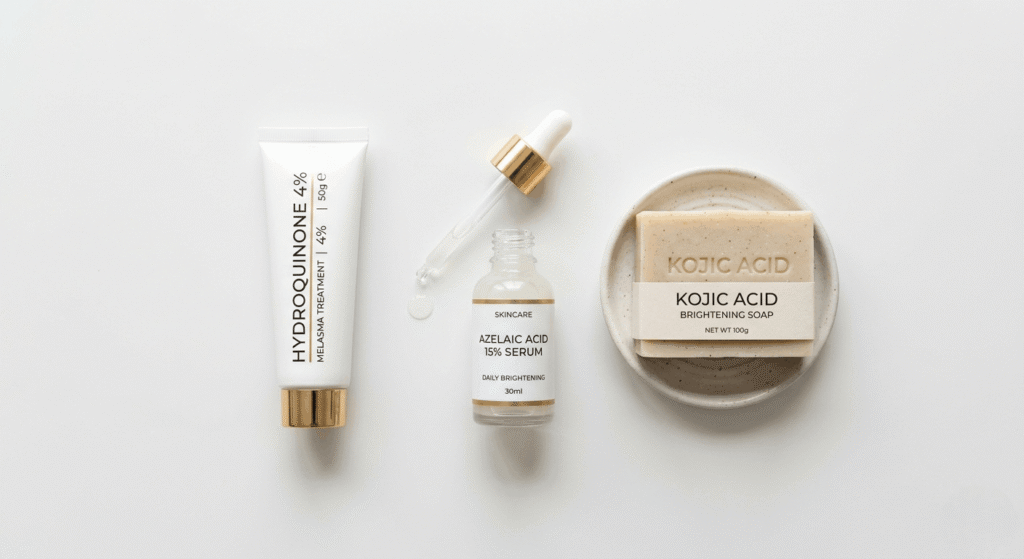
Hydroquinone Hydroquinone is considered the gold standard for melasma. It works by blocking the enzyme that triggers melanin production.
- Available in 2% (over the counter) and 4% (prescription) strengths
- Apply once or twice daily to affected areas only
- Use for a maximum of 3–6 months at a time to avoid side effects
Azelaic Acid A gentler alternative to hydroquinone, azelaic acid is great for sensitive skin and safe during pregnancy.
- Works by reducing melanin production
- Available in 15–20% prescription formulas
- Also helps with acne — a bonus for many users
Kojic Acid Derived from fungi, kojic acid is a natural skin-brightening ingredient found in many over-the-counter creams and serums.
- Best used as a supporting ingredient alongside other actives
- Gentle enough for daily use
- Results visible in 4–6 weeks of consistent use
2. Sun Protection — The Most Important Step
Here’s something most people don’t realize: no melasma treatment will work without daily sun protection.
UV rays are the number one trigger for melasma. Even a few minutes of unprotected sun exposure can undo weeks of treatment progress.
- Use SPF 30–50 broad-spectrum sunscreen every morning
- Reapply every 2 hours when outdoors
- Wear a wide-brimmed hat for extra protection
- Try a tinted sunscreen — the iron oxides in tinted formulas block visible light, which also triggers melasma
3. Chemical Peels
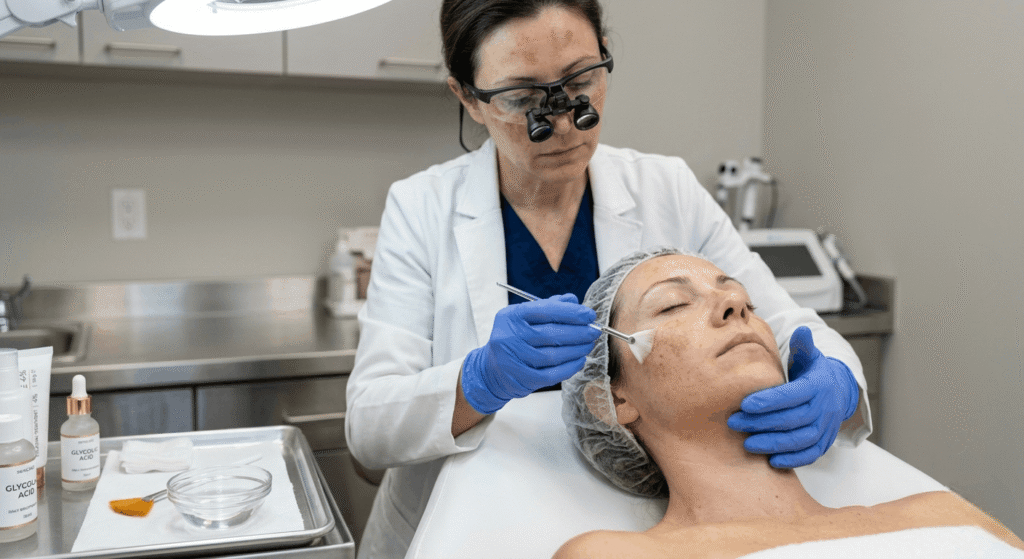
When topical creams aren’t enough, chemical peels can help by removing the top layers of skin and reducing surface pigmentation.
Popular options include:
- Glycolic acid peels — gentle and widely available
- Salicylic acid peels — great for oily or acne-prone skin
- TCA peels — stronger, performed by dermatologists only
Chemical peels work best as part of a broader melasma treatment plan — not as a standalone solution. They’re typically done in a series of 4–6 sessions.
4. Laser Treatments
Laser therapy targets melanin deep in the skin with concentrated light energy. It’s one of the fastest options available — but it comes with important caveats for melasma.
The key thing to know: not all lasers are safe for melasma. Aggressive laser treatments can actually worsen pigmentation, especially on darker skin tones.
Safe and effective options include:
- Low-fluence Q-switched Nd:YAG laser — considered the safest for melasma
- Pico laser — newer technology with promising results
- Fractional CO2 laser — used carefully in select cases
Always consult a board-certified dermatologist before pursuing laser treatment for melasma.
5. Oral Tranexamic Acid
This is a newer, exciting option in melasma treatment. Originally used as a medication to reduce bleeding, tranexamic acid was discovered to significantly lighten melasma when taken orally.
- Available by prescription only
- Typically taken for 8–12 weeks
- Studies show up to 50% improvement in melasma severity
- Generally well-tolerated with minimal side effects
Ask your dermatologist if oral tranexamic acid is right for you.
Building a Melasma Treatment Routine
Combining multiple approaches gives the best results. Here’s a simple routine to follow:
Morning:
- Gentle, non-foaming cleanser
- Vitamin C or azelaic acid serum
- Moisturizer
- Tinted SPF 50 sunscreen
Evening:
- Double cleanse
- Hydroquinone or kojic acid cream (on patches only)
- Moisturizer
Weekly:
- Gentle exfoliant (lactic acid or glycolic acid) 2x per week
- Avoid harsh scrubs — they irritate and worsen melasma
What to Avoid When Treating Melasma
Just as important as what you do is what you don’t do:
- ❌ Skip sunscreen even once
- ❌ Use harsh physical scrubs
- ❌ Pick at or scratch patches
- ❌ Use too many active ingredients at once
- ❌ Expect overnight results — melasma takes time
✅ CONCLUSION
Melasma is stubborn — but it’s absolutely treatable. The most effective melasma treatment isn’t one single product or procedure. It’s a consistent, layered approach that combines the right topical ingredients, daily SPF, and professional help when needed.
Start simple: a good brightening serum and SPF 50 every morning. Add a targeted cream at night. And if you’re not seeing progress after 8–12 weeks, see a dermatologist who can guide you toward stronger options.
Your skin has the ability to heal and renew itself. With the right plan and a little patience, clearer skin is absolutely within reach.
❓ FAQ SECTION
Q1: What is the most effective melasma treatment? The most effective melasma treatment combines daily SPF 50 sunscreen with topical ingredients like hydroquinone, azelaic acid, or tranexamic acid. For stubborn cases, professional options like chemical peels or laser therapy can accelerate results when guided by a dermatologist.
Q2: Can melasma be cured permanently? Melasma cannot always be permanently cured, but it can be effectively managed and significantly faded. Since hormones and sun exposure are key triggers, ongoing sun protection is essential to prevent it from returning after treatment.
Q3: How long does melasma treatment take to work? Most topical treatments take 8–12 weeks of consistent use to show visible improvement. Professional treatments like chemical peels or lasers may show faster results — sometimes within 2–4 weeks.
Q4: Is melasma treatment safe during pregnancy? Not all melasma treatments are safe during pregnancy. Hydroquinone and retinoids should be avoided. Azelaic acid and physical sunscreens are considered safe options. Always consult your doctor before starting any treatment during pregnancy.
Q5: Does melasma come back after treatment? Yes, melasma can return — especially with sun exposure or hormonal changes. This is why daily sunscreen is a lifelong habit, not just a treatment-phase step. Maintenance with gentle brightening ingredients helps keep it under control.
Q6: Can men get melasma? Yes, men can develop melasma, though it’s far less common than in women. In men, it’s often linked to prolonged sun exposure rather than hormonal changes. Treatment options are the same as for women.