


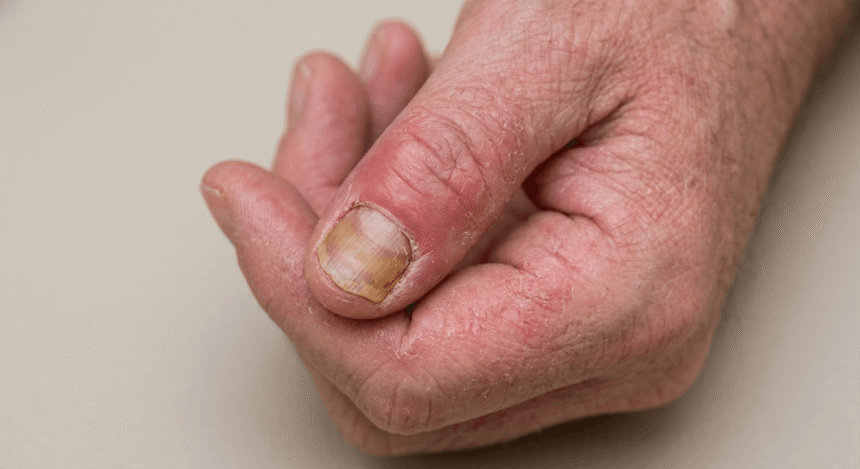
Most people associate contact dermatitis with skin — a red patch on the arm, a rash from a new soap. But contact dermatitis can absolutely affect your nails and the skin surrounding them, and it’s far more common than most people realize.
If you’ve noticed swollen, itchy, or inflamed skin around your fingernails — or changes in the nail itself like pitting, ridging, or discoloration — contact dermatitis may be what’s going on. And in many cases, the trigger is something you use every single day.
Here’s what you need to know.
What Is Contact Dermatitis of the Nails?
Contact dermatitis of the nails — sometimes called periungual dermatitis — is an inflammatory skin reaction that affects the nail folds, nail bed, and surrounding skin. It happens when the skin around or under the nail comes into contact with an irritant or allergen.
There are two types:
- Irritant contact dermatitis — caused by repeated exposure to substances that damage the skin barrier (cleaning products, water, solvents)
- Allergic contact dermatitis — an immune response to a specific allergen, often something in nail products
Both types cause similar symptoms but have different triggers and slightly different treatment approaches.
Common Causes and Triggers
Nail Products
This is the most frequent culprit — especially in recent years with the rise of gel and acrylic nails.
- Gel nail products — particularly methacrylate compounds (HEMA and di-HEMA) are known allergens
- Acrylic nails — contain acrylates that commonly cause allergic reactions
- Nail polish — certain resins like tosylamide/formaldehyde resin trigger reactions in sensitive individuals
- Nail glue — cyanoacrylate adhesives can irritate both skin and nail bed
The tricky part? An allergic reaction to nail products doesn’t always stay on the hands. People frequently spread the allergen by touching their face, eyelids, or neck — causing reactions far from the original source.
Household and Occupational Irritants
- Frequent handwashing or prolonged water exposure
- Dish soap, laundry detergent, cleaning sprays
- Rubber or latex gloves (ironic but true — the gloves meant to protect can be the trigger)
- Solvents, oils, or chemicals in occupational settings
Hairdressers, healthcare workers, cleaners, and food industry workers are among the most commonly affected groups due to repeated hand exposure.

Symptoms to Watch For
Contact dermatitis around the nails can show up in several ways:
Skin symptoms (around the nail):
- Redness, swelling, and tenderness around nail folds
- Itching or burning sensation
- Dry, cracked, or peeling skin at the fingertips
- Small blisters that may weep or crust over
Nail changes (from chronic exposure):
- Nail pitting or ridging
- Discoloration — yellow, brown, or white patches
- Nail thickening or brittleness
- Separation of the nail from the nail bed (onycholysis)
- Slow or distorted nail growth
Nail changes usually develop after prolonged or repeated exposure. They take longer to resolve than the surrounding skin symptoms because nails grow slowly.
How to Treat Contact Dermatitis Around Nails
Step 1: Identify and Remove the Trigger
This is the most important step — and the one most people skip. No treatment works well if you’re still being exposed to whatever caused the reaction.
If you suspect nail products, stop using them completely and give your nails at least 4–6 weeks to recover. Patch testing by a dermatologist can confirm exactly which ingredient is causing the reaction.
Step 2: Protect Your Hands
- Wear cotton-lined gloves when using cleaning products or doing wet work
- Avoid prolonged water exposure — dry hands thoroughly after washing
- Switch to fragrance-free, gentle hand soap
- Moisturize regularly with a fragrance-free barrier cream
Step 3: Treat the Inflammation
- Topical corticosteroids — a mild to moderate strength steroid cream applied to the affected skin reduces inflammation effectively. Avoid applying directly under the nail or on the nail plate itself.
- Emollients — thick moisturizers help repair the skin barrier and reduce dryness and cracking
- Tacrolimus or pimecrolimus — non-steroid options for sensitive areas or long-term management, available by prescription
For severe or persistent cases, a dermatologist may recommend oral corticosteroids or refer for formal patch testing to identify specific allergens.
Step 4: Be Patient With Nail Recovery
Skin around the nails can improve within 2–4 weeks once the trigger is removed and treatment begins. The nails themselves take much longer — fingernails grow approximately 3mm per month, so visible nail changes may take 3–6 months to fully grow out and resolve.

Can You Still Get Manicures?
If your reaction was triggered by gel or acrylic products, continuing manicures with the same products will keep the reaction going — or make it worse.
Some alternatives worth discussing with a nail technician or dermatologist:
- 10-free or 12-free nail polishes — formulated without the most common allergens including formaldehyde and tosylamide resins
- HEMA-free gel products — newer gel formulas specifically designed to reduce allergic reactions
- Regular polish — often better tolerated than gel or acrylic for sensitive individuals
- Taking a break entirely — sometimes the only way to let the nail area fully heal
Always tell your nail technician about your reaction. A good technician will know their products and help you identify safer alternatives.
Conclusion
Contact dermatitis around the nails is uncomfortable, persistent, and often mistaken for a nail infection or psoriasis. The key to clearing it up is finding and removing the trigger — usually a nail product or repeated irritant exposure — and giving the skin and nails adequate time to recover.
Treat the skin inflammation, protect your hands, and be patient with nail changes. They will resolve, just slowly.
If symptoms aren’t improving after a few weeks of avoiding triggers, a dermatologist can confirm the diagnosis, run patch tests to identify specific allergens, and prescribe stronger treatment if needed. Don’t keep guessing — get the right diagnosis and the right fix.
FAQ
Q1: Can gel nails cause contact dermatitis? Yes — gel nails are one of the most common triggers for allergic contact dermatitis around the nails. The main culprits are methacrylate compounds like HEMA, which are found in many gel formulas. Reactions can develop after years of use, even if you’ve had no problems before.
Q2: How do I know if it’s contact dermatitis or a nail fungal infection? Fungal nail infections typically cause thickening, yellowing, and crumbling of the nail itself — usually starting at the tip. Contact dermatitis primarily affects the skin around the nail first, with nail changes developing later. A dermatologist can confirm the diagnosis with a simple examination or nail scraping.
Q3: How long does contact dermatitis around nails take to heal? Skin symptoms around the nail usually improve within 2–4 weeks of removing the trigger and starting treatment. Nail changes take significantly longer — 3 to 6 months in many cases — because nails grow slowly and damaged nail must physically grow out.
Q4: Can contact dermatitis cause permanent nail damage? Permanent damage is rare but possible with very severe or long-standing untreated cases. In most situations, nails fully recover once the trigger is removed and the inflammation is treated. Early intervention significantly reduces the risk of lasting nail changes.
Q5: Is contact dermatitis around nails contagious? No. Contact dermatitis is an inflammatory reaction — not an infection. It cannot be passed from person to person. If multiple people in the same household develop similar symptoms, it usually points to a shared trigger, like a new cleaning product or hand soap.
Q6: What doctor should I see for nail contact dermatitis? A dermatologist is the best first step. They can distinguish contact dermatitis from other nail conditions like psoriasis or fungal infection, perform patch testing to identify specific allergens, and recommend appropriate treatment. In some cases, they may refer to an allergist for further testing.


